Manual-Handling Myths: Safe Lifting, Lowering and Carrying in the Age of Automation Picture This

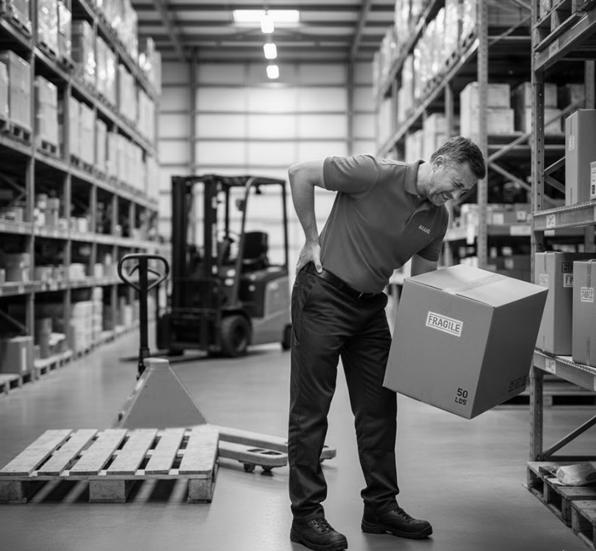
In the image, the worker is lifting a 50-lb box with a severely rounded back while twisting his torso, putting direct strain on his spine. He’s already clutching his lower back, showing clear signs of pain from improper manual handling. What makes it worse is that a pallet jack and forklift are right behind him—meaning mechanical assistance was available but ignored. This reflects the dangerous belief that “I can lift it myself,” even when safer options exist.
Workers should bend at the knees, keep the load close to the body, and avoid twisting when lifting or lowering items. If a box is heavy, awkward, or marked “fragile,” mechanical equipment like pallet jacks, forklifts, or lift-assist devices should be used instead of relying on physical strength alone. Supervisors should reinforce that using automation is not a sign of weakness but the safest, most efficient option. Following proper lifting techniques prevents strains, sprains, and long-term musculoskeletal injuries.